

Oklahoma Visitation Rights: Can a Parent Be Denied Access to Their Child?
Visitation rights protect the bond between children and their noncustodial parent, but these rights aren't absolute. Courts can restrict or deny visitation when a parent's contact threatens a child's well-being, though only through proper legal channels.
Our Oklahoma child custody attorneys help parents address serious safety concerns through court proceedings. Whether you're seeking to protect your child or defending your parenting time, this guide explains when visitation can be legally denied and the steps required.
What Are Visitation Rights
Visitation rights give the noncustodial parent scheduled time with their child following separation or divorce. These arrangements, typically outlined in a custody order, establish when and how the other parent can spend time with the child, protecting the parent-child relationship while serving the child's best interests.
Oklahoma courts view visitation as the child's right to maintain bonds with both parents, not merely a privilege granted to adults. A valid court order creates legally binding obligations that both parents must follow, with modifications requiring formal court proceedings rather than informal agreements between parties.
When Courts May Deny or Restrict Visitation
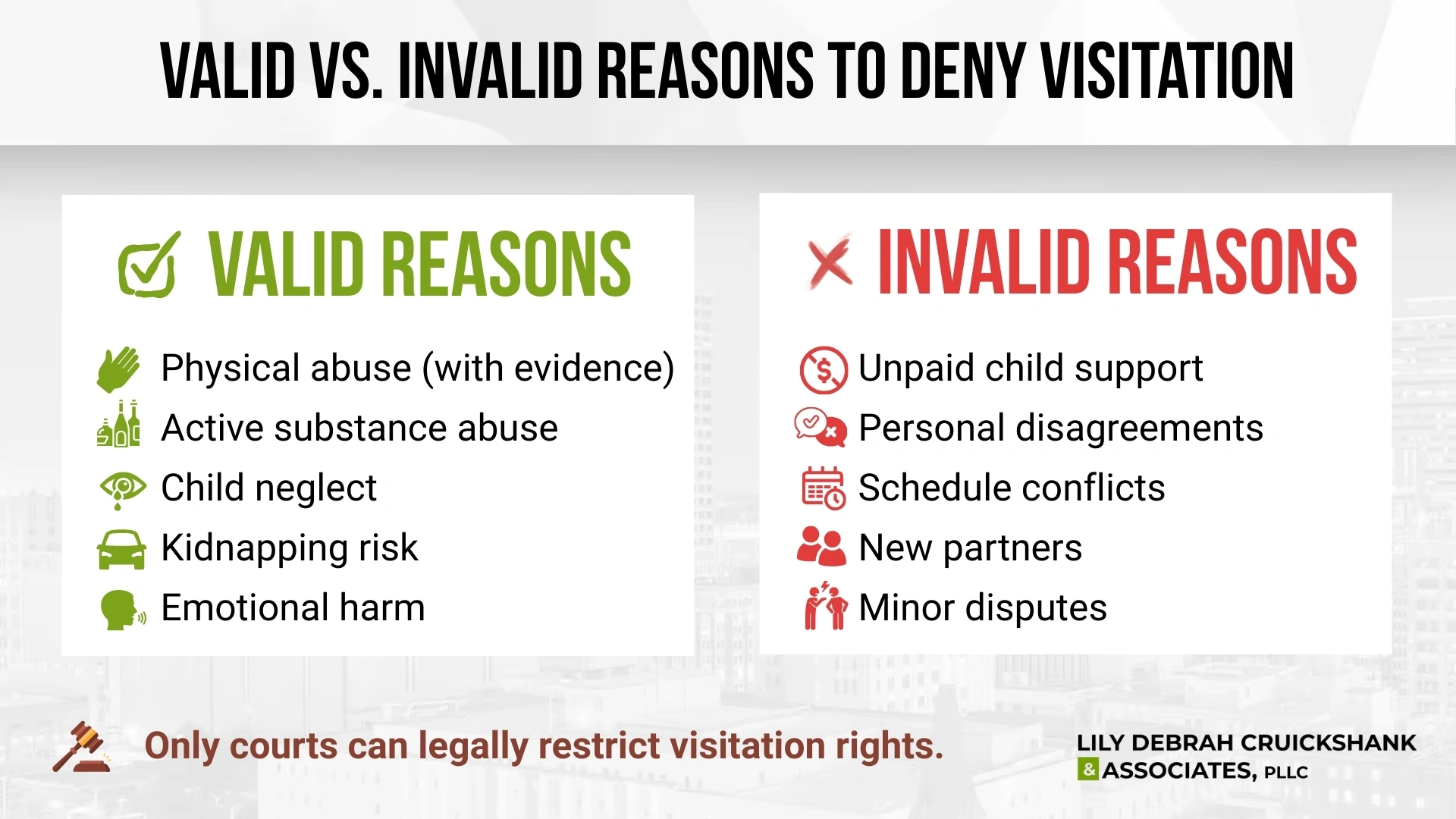
Oklahoma courts prioritize a child's safety and well-being above all else. Under Oklahoma statute 43 O.S. § 112.2, judges may modify or deny visitation rights when evidence shows that contact with the other parent creates a genuine risk.
- Physical abuse or domestic violence: Documented history of violence against the child or family members through law enforcement reports, medical records, and witness statements justifies supervised visitation or complete denial.
- Substance abuse issues: Active addiction poses clear dangers when parents fail drug tests, document repeated treatment failures, or show impaired supervision during parenting time.
- Child neglect or abandonment: Leaving children unsupervised, providing inadequate food or shelter, or exposing them to dangerous living conditions during visitation creates grounds for restriction.
- Risk of parental kidnapping: Threatened flight with the child or previous custody violations warrant suspension, with courts often imposing international travel restrictions when abduction concerns exist.
- Emotional or psychological harm: Consistent manipulation of children, exposure to adult conflicts, or deliberate alienation from the custodial parent warrants intervention.
Courts require substantial proof before restricting the parent-child relationship. Judges balance safety concerns against preserving bonds between children and both parents, typically exploring supervised visitation before considering complete denial.
Invalid Reasons to Deny Visitation
Oklahoma law separates child support obligations from visitation rights. A custodial parent cannot legally withhold visitation even when facing legitimate grievances.
Child Support Non-Payment
Many custodial parents believe they can deny visitation when the other parent fails to pay child support. This assumption is wrong. Child support and visitation are separate matters handled through different legal processes under Oklahoma statute 43 O.S. § 118.
Important: Oklahoma courts enforce child support through wage garnishment, contempt proceedings, and license suspensions, not by denying visitation.
Personal Disputes Between Parents

Disagreements about parenting styles, new romantic partners, or lifestyle choices don't justify keeping children from the noncustodial parent. Courts generally frown upon using visitation as leverage in adult conflicts or divorce settlements.
Minor Schedule Conflicts
Last-minute work obligations or family events don't override a valid court order. The court-ordered visitation schedule requires both parents' compliance, unless modified through proper legal channels.
Legal Steps When You Have Safety Concerns
Taking unilateral action to deny visitation, even with valid safety concerns, risks contempt-of-court charges. Oklahoma law requires custodial parents to follow specific procedures.
1. Document Everything Immediately
Start building your case before filing court papers. Detailed records strengthen your position when seeking to modify the custody order. Create date and time logs, gather photographic evidence, collect witness statements, and obtain professional reports from doctors or therapists.
2. File a Motion to Modify Custody
Once you've gathered evidence, your Oklahoma family law attorney files a formal request asking the court to restrict or deny visitation. The motion must demonstrate substantial changes in circumstances that threaten the child's well-being under 43 O.S. § 112.
3. Request Emergency Orders When Necessary
When immediate danger exists, courts can issue temporary orders within 24 hours to provide short-term protection. Emergency situations include active abuse requiring medical attention, credible threats to flee, dangerous living conditions, or substance abuse episodes around the child.
4. Attend Court Hearings and Present Evidence
Judges evaluate visitation modifications during formal hearings where both parents testify. Your attorney presents documentation, calls witnesses, and cross-examines the other parent. The court weighs all evidence against Oklahoma's child custody laws and the terms of the custody agreement before deciding.
What Happens When a Parent Denies Visitation Without Court Approval
Violating a valid court order carries serious consequences. Even with genuine safety concerns, custodial parents who independently withhold visitation face legal penalties.
Contempt of Court Charges
Courts view visitation interference as a direct violation of their authority. Contempt findings can result in:
- Monetary fines: Compensation to the other parent for missed parenting time.
- Makeup visitation: Extra time awarded to the noncustodial parent as outlined in Oklahoma custody arrangements.
- Legal fees: Payment of the other parent's attorney costs.
Potential Custody Modification
Repeated denial of visitation signals an unwillingness to foster the parent-child relationship. Courts may respond by modifying custody arrangements. In extreme cases, judges transfer primary custody to the previously noncustodial parent.
Impact on Future Court Decisions

Once a parent establishes a pattern of visitation interference, courts view future requests with skepticism. This history weighs heavily in subsequent motions affecting the custody agreement or parenting plan modifications.
Options When the Other Parent Doesn't Exercise Visitation
The situation reverses when a noncustodial parent fails to spend time with the child. While frustrating, this scenario requires a different legal approach than denying visitation rights.
- Document the abandonment: Track missed visits, canceled plans, and periods of no contact. This record becomes relevant for future custody modifications or child support adjustments.
- Recognize enforcement limitations: Courts won't compel a parent to exercise visitation rights. Unlike child support, which courts strictly enforce, scheduled visitation remains the noncustodial parent's choice.
- Evaluate custody modification options: Extended periods without contact may justify seeking sole custody or adjusting the parenting plan. Consult with an attorney to determine whether the modification serves your child's interests.
Consistent failure to exercise visitation demonstrates disinterest in maintaining the parent-child relationship. This pattern, when properly documented, strengthens requests for custody modifications or adjustments to support obligations.
How Courts Evaluate Visitation Denial Requests
Oklahoma judges follow specific criteria when deciding whether to restrict a parent's time with their child. The legal system balances protecting children against preserving the parent-child relationship.
Best Interests Standard
All decisions affecting child custody and visitation arrangements start with this principle. Under Oklahoma statute 43 O.S. § 109, courts ask whether maintaining current visitation serves the child's best interests, considering:
- Physical safety: Protection from harm or dangerous conditions.
- Emotional well-being: Stable, nurturing interactions that support healthy development.
- Developmental needs: Age-appropriate care and attention during parenting time.
Burden of Proof Requirements
The parent seeking to deny or restrict visitation carries the burden. You must present compelling evidence, not suspicions or general concerns. Courts require substantial proof that visitation creates a genuine risk to the child's safety.
Consideration of Supervised Visitation as an Alternative
Before completely denying visitation, judges often order supervised arrangements. A third party monitors contact between parent and child, allowing the relationship to continue while protecting against documented risks. The Oklahoma supervised visitation guidelines establish parameters for these arrangements.
Modifying Visitation Orders Over Time

Custody and visitation arrangements aren't permanent. As circumstances change, parents can seek modifications through the courts.
Oklahoma law permits a modification of custody when substantial changes in circumstances affect the child's well-being. Valid reasons for seeking visitation restrictions include:
- New evidence of abuse: Recently discovered or ongoing harm requiring domestic violence intervention.
- Deteriorating parent condition: New substance abuse, mental health crisis, or criminal activity.
- Child's expressed wishes: Older children's preferences carry weight, though courts don't automatically defer to them.
- Relocation concerns: When a parent's move creates safety or stability issues.
File a motion to modify custody with the court that issued the original order. Your attorney presents evidence supporting the change, and the judge schedules a hearing. Both parents have opportunities to testify and present witnesses.
Protecting Your Rights During Visitation Disputes
Whether you're seeking to restrict the other parent's time or defending against false allegations, proper legal representation makes a critical difference.
Avoid Common Mistakes
Parents facing visitation disputes often damage their own cases by:
- Self-help enforcement: Never deny court-ordered visitation without approval.
- Poor documentation: Vague complaints without specific dates, times, or details don't convince judges.
- Alienating behavior: Actions that damage the parent-child relationship harm your credibility and violate Oklahoma custody guidelines.
- Social media evidence: Complaints posted online can be used against you in court.
Work with an Experienced Attorney

An experienced attorney helps you file a motion correctly, gather persuasive evidence, and present a compelling case. Family law matters involving visitation rights require knowledge of Oklahoma statutes, local court procedures found in the Oklahoma Court Rules, and judges' preferences.
Understand the Realistic Timeline
Court processes take time. Emergency orders may be available within days, but final hearings on visitation modifications typically occur weeks or months after filing. Plan accordingly and don't expect instant resolution.
Take the Right Legal Steps to Protect Your Child
Visitation rights can be denied or restricted when a parent's contact threatens a child's safety, but only through proper court proceedings. Oklahoma law requires custodial parents to present evidence and obtain judicial approval before withholding visitation. Self-help remedies risk contempt charges and potential custody loss.
Our Oklahoma family law lawyers at Lily Debrah Cruickshank & Associates have protected over 1,000 families through proper legal channels. Located in downtown Oklahoma City with virtual consultations available statewide, we help parents file emergency motions and build strong cases for visitation modifications. Reach out today to discuss your situation and learn how we can help safeguard your child's well-being.
Proper documentation makes the difference in visitation modification cases. Our attorneys guide evidence gathering and present compelling arguments to Oklahoma courts.
Serving Oklahoma City and surrounding counties with compassionate guidance through custody disputes.
Recent Posts
Categories


Our Reach: Serving Oklahoma City and Beyond
We proudly serve the Oklahoma City community from our downtown office.Our experienced legal team extends its reach to surrounding areas, providing comprehensive family law services to families throughout the region.
Find Clarity and Direction for Your Family's Legal Matters!
Are you facing a family law challenge? Our experienced attorneys provide strategic legal representation, protecting your rights and ensuring the best possible outcome. Schedule a consultation to discuss your situation and develop a plan.
- Address11317 S. Western Ave,
Suite 300, Oklahoma City, OK 73170 - Phone(405) 606-3062
- Fax(405) 606-3065
- OKLAHOMA OFFICE
- Review Us