

Understanding Oklahoma Child Custody Laws: What You Need to Know in 2026
Navigating child custody laws can be challenging for any parent, and understanding Oklahoma's legal framework is necessary to ensure your child's best interests are being met. Whether you are dealing with a divorce, separation, or other family matters, it’s essential to have a clear grasp of the rules and procedures that govern child custody.
This blog will guide you through the latest Oklahoma child custody laws, focusing on key aspects such as paternity, types of child custody, and what factors courts consider when making custody decisions. If you need expert advice or representation, consider consulting with our experienced Oklahoma City child custody lawyers to help you through these challenges.
Oklahoma Custody Laws: Key Highlights

As of 2026, Oklahoma custody laws emphasize the welfare of the child, ensuring that all custody decisions prioritize their physical, emotional, and psychological well-being. The law aims to keep children connected with both parents whenever possible, and custody arrangements are designed with their best interests in mind.
Types of Custody in Oklahoma
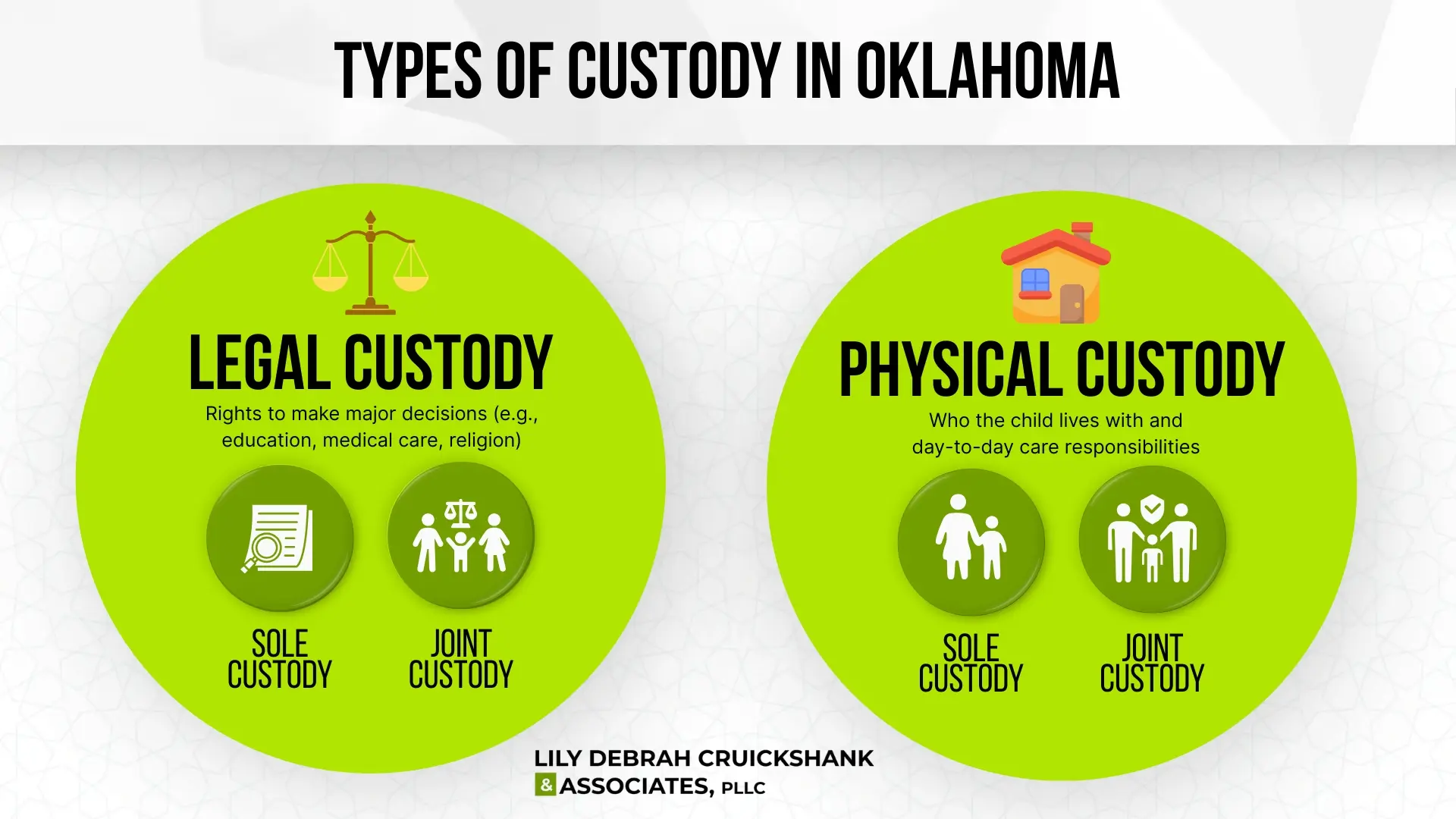
Oklahoma recognizes two primary types of custody: legal custody and physical custody.
- Legal custody refers to the right to make major decisions regarding your child's life, such as their education, medical care, and religious upbringing.
- Physical custody refers to who the child lives with on a daily basis and who is responsible for their day-to-day care.
In addition to these two categories, there are two primary custody arrangements: sole custody and joint custody.
- Sole custody: This arrangement grants one parent full responsibility for the child’s care and decision-making. The other parent may have visitation rights, but they are not involved in major decisions.
- Joint custody: Both parents share legal and/or physical custody. This arrangement is often preferred in Oklahoma because it encourages frequent, ongoing contact between the child and both parents. However, it requires clear communication and cooperation between parents, usually detailed in a "joint custody plan" approved by the court.
Determining Custody: Best Interests of the Child
Under Oklahoma law, when making custody decisions, the court evaluates several factors to determine what is in the best interest of the child. Some of the primary factors include:
- Parental involvement: The court considers which parent has been more involved in the child’s life, including their day-to-day activities and decision-making.
- Stability: Stability is crucial. Courts assess the home environment, the child’s relationship with each parent, and the ability of each parent to provide a stable living situation.
- Parental fitness: The court looks at the mental, physical, and emotional health of both parents. Any history of abuse, neglect, or substance abuse may influence the decision.
- Child’s preference: In Oklahoma, children aged 12 or older may be allowed to express a preference about which parent they would like to live with. However, the court will evaluate the maturity and reasoning behind the child's preference.
New Child Custody Laws in Oklahoma
Recent changes to Oklahoma’s child custody laws have focused on ensuring fairness, protecting both parents' rights, and safeguarding the child’s well-being. One key update has been the emphasis on the child’s right to remain in contact with both parents, provided there are no safety concerns.
Additionally, Oklahoma has introduced reforms to enhance the mediation process in child custody disputes. Mediation is a less adversarial way for parents to work out custody and visitation arrangements with the help of a neutral third-party mediator. This process is designed to avoid the emotional and financial costs of prolonged court battles. However, if there is a history of domestic violence or abuse, the judge may waive the requirement for mediation, recognizing that it could place one party at a disadvantage.
Establishing Paternity in Oklahoma
Before child custody can be determined, it is necessary to establish paternity if the parents are unmarried. Oklahoma law provides several ways to establish paternity:
- Acknowledgment of paternity: Unmarried parents can sign a voluntary acknowledgment of paternity. This formal recognition establishes the father’s legal rights and responsibilities regarding child custody and visitation.
- Court order: If there is any dispute about paternity, the court may order a DNA test to determine the biological father.
Establishing paternity is important for fathers who want legal rights to child custody, visitation, and decision-making for their child.
Custody Disputes: What Happens in Court?

If mediation fails or is not appropriate, a judge will make a final determination regarding custody. Both parents will present their case, and the court will consider the following factors when deciding:
- The child’s relationship with each parent: The judge will look at which parent has been more involved in the child’s daily life and the quality of the relationship.
- Each parent’s living situation: The court will examine the stability and safety of each parent’s home.
- The child’s preference: If the child is old enough and mature enough, their wishes will be considered.
- Evidence of abuse or neglect: Any history of domestic violence or abuse will heavily influence the court’s decision.
In some child custody cases, the court may appoint a guardian ad litem to represent the child’s best interests during custody proceedings. This individual will investigate the family dynamics and make recommendations to the court.
Supervised Visitation in Oklahoma
In cases involving serious concerns about the child’s safety, the court may order supervised visitation during holidays and regular days. This is common in situations involving allegations of abuse, neglect, or substance abuse. Supervised visitation means that the parent may spend time with the child only under the supervision of a third party, ensuring the child’s safety is not compromised.
Custody Modifications and Relocation

Once a child custody order is in place, it can be modified if there has been a substantial change in circumstances. For example, if a parent relocates more than 75 miles away, they must notify the other parent in writing, outlining the new living arrangements and suggesting a revised visitation schedule. If the other parent objects to the relocation after divorce, they can file an objection in court.
If a parent wishes to modify custody or visitation due to changes such as a new job, health issues, or a change in the child’s needs, they must file a petition for modification with the court.
How to File for Custody in Oklahoma
If you're seeking child custody, it’s important to understand the process. In Oklahoma, the steps typically involve:
- Filing a petition: A parent seeking custody must file a petition for custody in the county where the child resides.
- Serving the other parent: The other parent must be officially notified of the custody proceedings.
- Court hearing: A judge will review the case and decide based on the child's best interests.
Expert Legal Help for Oklahoma Child Custody
Understanding Oklahoma child custody laws is crucial for parents who are facing custody disputes or seeking to establish custody and visitation rights. By staying informed about the latest legal changes and understanding the factors courts consider, you can ensure your child's best interests are prioritized. Whether you're seeking joint or sole custody, or need help with a custody modification or relocation, it's essential to work with a family law expert who can guide you through the process.
For personalized legal advice, consider consulting with our exceptional attorneys who can help you navigate the complexities of Oklahoma child custody laws and secure the best outcome for your family.
Our specialized legal team is here to help you through every step of the custody process with personalized guidance and care.
Ensure you understand your rights and options under Oklahoma child custody laws. Protect your child’s well-being by consulting with an experienced child custody attorney.
Recent Posts
.avif)

Our Reach: Serving Oklahoma City and Beyond
We proudly serve the Oklahoma City community from our downtown office.Our experienced legal team extends its reach to surrounding areas, providing comprehensive family law services to families throughout the region.
Find Clarity and Direction for Your Family's Legal Matters!
Are you facing a family law challenge? Our experienced attorneys provide strategic legal representation, protecting your rights and ensuring the best possible outcome. Schedule a consultation to discuss your situation and develop a plan.
- Address722 N Broadway Ave
Suite 402
Oklahoma City, OK 73102 - Phone(405) 606-3062
- Fax(405) 606-3065
- OKLAHOMA OFFICE
- Review Us